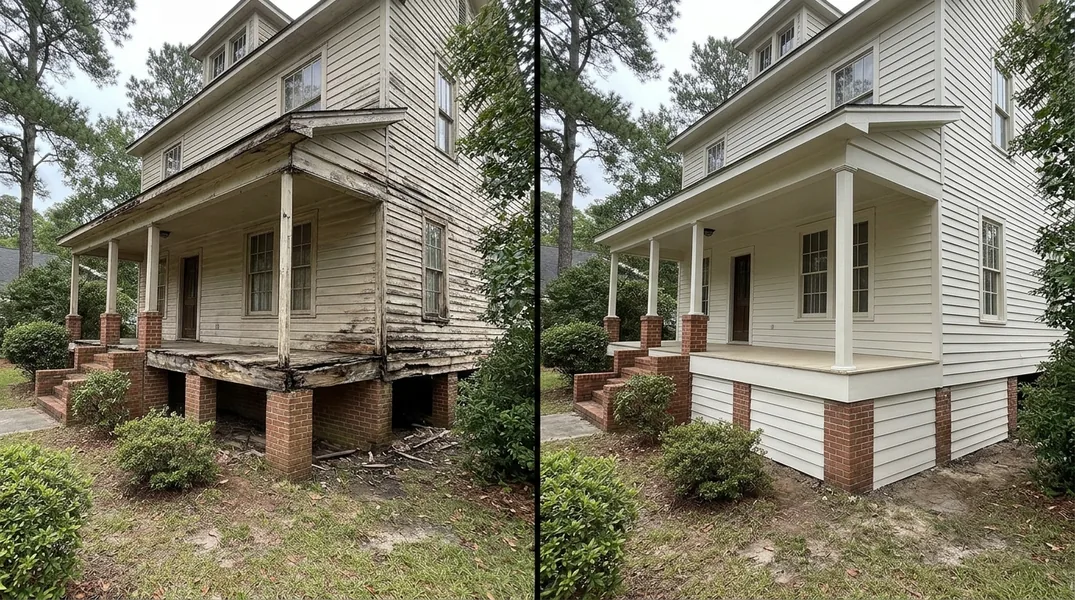
Termite Damage vs Wood Rot: Understanding the Difference
If you own a home in Fayetteville, you've likely heard warnings about both termites and wood rot. While both can cause serious structural damage to your property, they are fundamentally different problems that require different solutions. Understanding the distinction is the first step toward protecting your home and knowing when to call for professional help.
Termites are living insects that actively feed on cellulose in wood, creating tunnels and galleries as they consume the material from the inside out. Wood rot, by contrast, is a fungal disease that breaks down the wood's cellular structure through decay. Dry rot is a specific type of wood rot caused by a fungus called Serpula lacrymans, which thrives in damp conditions and can spread rapidly through a home. Both problems weaken your home's structural integrity, but the treatment approaches are entirely different. That's why accurate diagnosis is so important before you invest money in repairs.
Signs of Termite Damage: What to Look For
Identifying signs of termite damage early can save you thousands of dollars in repair costs. Termites work quietly and often go unnoticed until significant damage has occurred. One of the most obvious indicators is the presence of mud tubes on foundation walls or wooden beams. These pencil-thin tunnels are created by subterranean termites to travel safely between their colony and food sources while maintaining moisture. If you spot these tubes, termites are actively feeding on your home.
Another telltale sign of termite damage is wood that sounds hollow when you tap it. Termites hollow out wood from the inside while leaving the outer shell relatively intact, which is why infested wood often feels papery or makes a dull thud when struck. You may also notice discarded termite wings near windowsills or doors, especially during spring when termites swarm to establish new colonies. Additionally, look for small holes in wood surfaces where termites have emerged, and keep an eye out for sawdust-like frass (termite droppings) near baseboards or wooden structures. If you suspect termite activity in your Fayetteville home, contact a professional immediately to assess the extent of the infestation.
What Does Dry Rot Look Like: Identifying Wood Rot Damage
Understanding what does dry rot look like will help you catch wood rot problems before they compromise your home's safety. Dry rot typically appears as dark brown or reddish-brown discoloration on affected wood. The wood becomes brittle and may crack in a distinctive cubic pattern, breaking apart into small cube-shaped pieces when you apply pressure. This cracking pattern is one of the most reliable visual indicators of dry rot, and it looks quite different from the clean tunnels left behind by termites.
Dry rot often has a musty, damp smell associated with it, even though the wood may appear dry on the surface. You might also notice white, thread-like fungal growth or a silvery-gray mycelium on the wood or nearby surfaces. The affected wood becomes soft, spongy, and loses its structural strength. Unlike termite damage, which creates hollow galleries, dry rot causes the wood to deteriorate uniformly. Wood rot damage is often found in areas with poor ventilation, high moisture levels, or where water has leaked over time. Basements, crawl spaces, attics, and areas around windows and doors are common locations for dry rot to develop. If you notice any of these signs in your home, Wood Rot & Dry Rot Repair should be your next priority.
Key Wood Damage Signs Every Homeowner Should Know
Beyond the specific indicators of termites and dry rot, there are several general wood damage signs that warrant immediate attention. Soft or spongy wood that yields easily to pressure is a red flag, regardless of the cause. Warping, buckling, or visible decay on structural elements like beams, joists, or subflooring indicates that your home's foundation is at risk. Sagging ceilings or floors, doors that no longer close properly, and visible gaps between walls and trim can all signal underlying wood damage that needs professional evaluation.
Water stains, discoloration, or visible mold growth on wood surfaces are also important warning signs. These conditions often create the perfect environment for both termite infestations and fungal decay to flourish. Additionally, if you notice an unusual number of insects around your home, especially during certain seasons, or if you detect strange odors coming from your walls or crawl space, these could indicate pest or rot problems. The key is not to ignore these signs. Many homeowners delay addressing wood damage because they're unsure whether to call a pest control company or a carpenter. The answer often depends on the specific problem, which is why a professional inspection is so valuable. Whether you're dealing with Termite Damage Repair needs or structural issues from decay, getting an expert opinion will give you clarity and peace of mind.
How Moisture Plays a Role in Both Problems
Moisture is a common factor in both termite infestations and wood rot, though it affects each problem differently. Termites require moisture to survive and thrive, which is why they're attracted to damp areas around your home's foundation. Subterranean termites, the most common type in the United States, live in soil and need to maintain contact with moisture. If your home has poor drainage, foundation cracks, or water intrusion issues, you're creating an ideal environment for termites to establish colonies and begin feeding on your wooden structures.
Wood rot, particularly dry rot, also depends heavily on moisture. Despite its name, dry rot requires water to develop. The fungus needs a moisture content of about 20 percent or higher to grow and spread. Leaking roofs, faulty gutters, plumbing leaks, and inadequate ventilation all contribute to the moisture buildup that allows rot to flourish. The good news is that addressing moisture problems in your home can help prevent both issues. Improving drainage around your foundation, fixing leaks promptly, ensuring proper ventilation in crawl spaces and attics, and maintaining gutters and downspouts will significantly reduce your risk of termite damage and wood rot. If you've already discovered damage, addressing the underlying moisture problem is just as important as repairing the affected wood.
Wood Rot & Dry Rot Repair Near Me: When to Call a Professional
If you've identified any signs of wood damage in your home, it's time to call in a professional. Attempting to diagnose or repair structural wood damage yourself can be dangerous and costly if done incorrectly. A qualified carpenter can accurately identify whether you're dealing with termite damage, dry rot, or another type of wood deterioration. They can also assess how extensive the damage is and recommend the most effective repair strategy. For residents in Fayetteville, Fayetteville Carpentry offers comprehensive Wood Rot & Dry Rot Repair services that address both the visible damage and the underlying causes.
Depending on the severity of the damage, repairs might involve treating affected wood, replacing rotted sections, or in serious cases, addressing structural elements like Floor Joist & Subfloor Repair or Beam Replacement & Load-Bearing Wall Removal. The scope of work will depend on your specific situation. Rather than guessing or hoping the problem goes away, reach out to Fayetteville Carpentry at (472) 202-5534 to schedule a free estimate. Our team will thoroughly inspect your home and provide you with a clear, honest assessment of what needs to be done.
Prevention Tips to Protect Your Home
The best approach to wood damage is prevention. Start by controlling moisture in and around your home. Keep gutters clean and ensure downspouts direct water at least four to six feet away from your foundation. Repair roof leaks and plumbing issues promptly, and ensure that crawl spaces and basements have adequate ventilation. Maintain proper grading around your home so that water slopes away from the foundation rather than pooling near it. Consider installing a vapor barrier in crawl spaces to reduce moisture from the ground.
For termite prevention, eliminate wood-to-soil contact around your home's foundation whenever possible. Keep mulch and landscaping materials at least one foot away from wooden structures. Inspect your home regularly for signs of termites, especially if you live in an area with a history of termite activity. Have your foundation and wooden structural elements checked annually by a professional. If you've had termite problems before, consider having your home treated preventatively. By staying vigilant and addressing moisture issues promptly, you can significantly reduce the risk of both termite damage and wood rot affecting your Fayetteville home. When in doubt, don't hesitate to call Fayetteville Carpentry for expert guidance and professional repairs.
Looking for a professional carpentry contractor in Fayetteville? Fayetteville Carpentry responds fast for all your carpentry needs.
Get a Free QuoteOur services: Wood Rot & Dry Rot Repair · Termite Damage Repair · Floor Joist & Subfloor Repair