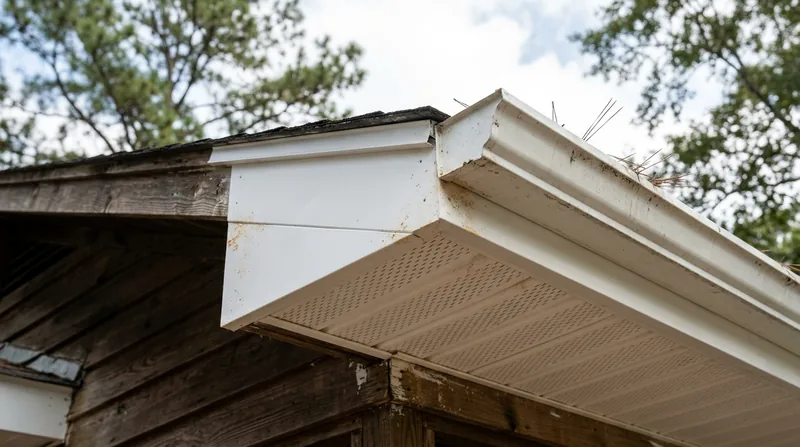




Fascia and soffits take the first hit when gutters overflow or carpenter bees move in, but the damage stays hidden until rot spreads deep into the fascia board and behind the soffit. In Fayetteville's long humid summers and heavy thunderstorm season, water trapped under a failed gutter eats through wood fast. The Sandhills terrain here means most homes sit under mature pines and water oaks that shed needles and debris into gutters year-round, and when those gutters fail, the fascia behind them rots out of sight. Fascia, soffit and exterior trim repair stops that water before it reaches the house frame, and we do it with durable materials and proper sealing so the problem stays solved. We also seal the carpenter bee holes that honeycomb through exposed trim, which keeps new colonies from moving in. If your gutters are overflowing, your soffit is sagging, or you see soft spots in the fascia when you touch it, that's water damage at work. We replace the damaged wood with weather-resistant material, flash it properly so water runs off instead of pooling, and trim the edges clean so your home sheds water the way it should.
Why Fascia and Soffit Fail Fast in Fayetteville's Climate
Fayetteville sits where the sandy Sandhills meet the Cape Fear River valley, which means long, wet summers, real hurricane exposure, and the kind of heat and humidity that keeps wood damp for months. Gutter overflow is the main culprit here. When gutters clog with pine needles and debris from the longleaf and loblolly pines that frame every neighborhood, water backs up and spills behind the fascia board instead of running down the downspout. That trapped water soaks into the wood grain, and in this climate, it stays wet. Carpenter bees also drill through exposed trim and fascia, leaving behind holes that let rain in and weaken the wood further. Once the fascia starts to rot, the soffit follows, and if the rot reaches the rafter tails or rim joist, the repair cost climbs fast.
- Overflowing gutters deposit water behind the fascia board, where it soaks into the wood and stays wet in Fayetteville's humid climate.
- Carpenter bees drill holes through trim and fascia, creating entry points for water and weakening the structural integrity of the board.
- Pine needles and debris from mature trees clog gutters and prevent water from draining, forcing overflow down the back of the fascia.
- Wood rot spreads quickly once it starts, moving from the fascia into the soffit and toward the rafter tails and rim joist.
- Storm damage from heavy rain and wind can tear fascia loose or peel it back, exposing the wood to direct water intrusion.
Catching fascia and soffit damage early means a repair instead of a full replacement, which saves money and keeps your roof edge sealed tight.
Key info: In Fayetteville's Haymount and Vanstory Hills neighborhoods, where 1900s Colonials and Craftsman homes sit under old-growth oaks and pines, fascia rot is common after 80+ years of gutter overflow and carpenter bee damage. We inspect and repair before replacement whenever the wood allows it, saving homeowners thousands.
For more on how water damage affects your home's structure, see our wood rot repair service page.
How We Replace Fascia, Soffit and Trim in Fayetteville: Step by Step
We start with a close look at the damage. If the rot is surface-level and the wood underneath is solid, we can often repair it by removing the bad section and splicing in new material. If the rot has eaten through the board or reached the rafter tail, we replace the fascia outright. Soffit replacement follows the same logic. We then seal all joints with exterior-grade caulk, flash the top edge so water sheds away from the house, and seal any carpenter bee holes with epoxy filler and paint. The whole job protects your roof edge and keeps water out of the attic and rim joist.
- We remove the gutter and downspout to access the full fascia board and soffit underneath.
- We assess the rot depth by probing the wood and checking for soft spots or spongy areas that indicate water damage.
- We remove the damaged fascia and soffit sections, cutting back to solid wood and exposing the rafter tails and rim joist for inspection.
- We install new fascia and soffit material with proper flashing at the roof line so water drains away from the house.
- We caulk all joints and seal carpenter bee holes with epoxy and paint to prevent new infestations and water entry.
- We reinstall the gutter and downspout, ensuring proper slope so water flows freely and doesn't pool against the new fascia.
The whole process typically takes one to two days, depending on the length of fascia and the extent of the rot.
Example: A 1960s brick ranch in Bonnie Doone with 40 linear feet of fascia and soffit and carpenter bee damage cost $1,400 to replace. The homeowner had noticed the gutter pulling away from the house and soft spots in the fascia trim. We removed the damaged boards, inspected the rafter tails and rim joist for rot, found them solid, and installed new fascia with proper flashing and sealed all the bee holes. The job took one day, and the gutters now drain clean.
For related structural concerns, see our termite damage repair page if the rot extends into the rim joist or rafter tails.
Repair Methods and Materials for Fascia and Soffit
| Approach | Description | Best for |
|---|---|---|
| Splice repair | Remove the rotted section of fascia, cut back to solid wood, and install a new piece sistered and fastened to the rafter tail or trim board. | Localized rot in one or two sections where the rest of the fascia is sound. |
| Full fascia replacement | Remove the entire fascia board, inspect the rafter tails for rot, and install new fascia with proper flashing and caulk at all joints. | Rot that spans more than half the board length or affects multiple sections. |
| Soffit replacement | Remove the damaged soffit, inspect the rim joist and rafter tails, and install new soffit material with ventilation preserved where needed. | Sagging, water-damaged, or bee-riddled soffit that no longer seals properly. |
| Bee hole sealing | Fill carpenter bee holes with epoxy wood filler, sand smooth, and paint with exterior paint to prevent new entry and water intrusion. | Active or past carpenter bee damage that creates water entry points in otherwise sound fascia. |
| Gutter and flashing upgrade | Install new gutter with proper slope, add or upgrade flashing at the roof line, and ensure downspouts carry water away from the foundation. | Prevention of future fascia rot by stopping water backup before it starts. |
Fascia, Soffit and Exterior Trim Repair Cost in Fayetteville: What to Expect
Fascia and soffit repair costs depend on how much wood is damaged, whether you need a splice repair or a full board replacement, and whether the damage extends into the rafter tails or rim joist. A splice repair on 10 to 15 linear feet of fascia typically runs $700 to $1,000. A full replacement of 30 to 40 linear feet of fascia and soffit runs $1,200 to $2,000. If the rot has reached the rafter tail or rim joist, the job becomes structural carpentry, and the cost climbs because we need to inspect and possibly repair or reinforce the framing underneath. Gutter work and flashing upgrades add to the total but prevent future rot, so they pay for themselves over time.
The best way to know your actual cost is to get a free estimate. We'll inspect the fascia, check the soffit and rafter tails, and give you a clear number based on what we find. For a full breakdown of our pricing structure and what affects the final bill, visit our pricing page.
Fascia, Soffit and Exterior Trim Repair Near Me: What Fayetteville Homeowners Should Know
When you're hiring a carpenter for fascia and soffit work, make sure they inspect the rafter tails and rim joist for rot before they give you a price. A low estimate that doesn't include a full inspection is a red flag. Ask for references from recent jobs, and call at least two of them to ask about the quality of the work and whether the repair held up. If you have an HOA or live in a historic district like Haymount, check your local guidelines before you start, because some neighborhoods have rules about materials and colors. Get at least two estimates so you understand the range of pricing and approach. Finally, ask whether the contractor is fully insured and can provide proof of coverage before work begins.
Ready to get started? Contact us for a free estimate at (472) 202-5534. We'll inspect your fascia and soffit, explain what we find, and give you a clear price with no surprises.
Fascia, Soffit & Exterior Trim Repair in Fayetteville: Pricing Guide
| Service | Price | Details |
|---|---|---|
| Splice repair | Starting at $700 | Remove and replace one rotted section of fascia or soffit, splice repair with new wood, seal and paint. Typical for localized damage. |
| Full fascia replacement | Starting at $1,200 | Replace 30 to 40 linear feet of fascia board, inspect rafter tails, install flashing, seal all joints and caulk. Cost varies with damage extent. |
| Soffit replacement and gutter work | Starting at $1,500 | Replace soffit, upgrade gutter and flashing, seal carpenter bee holes, ensure proper water drainage. Prevents future rot and water intrusion. |
| Structural fascia or soffit with rim joist repair | On estimate | Rot that extends into rafter tails or rim joist requires inspection and possible reinforcement. On-site assessment required for accurate pricing. |
| Travel | Included | No separate mileage fee for Fayetteville and surrounding service areas within Cumberland County. |
| Free estimate | No obligation | Call (472) 202-5534 for a full inspection and written estimate within 24 hours. No charge, no pressure to book. |
Indicative pricing, the exact cost depends on square footage, finish, and site access. Free personalized estimate within 24h at (472) 202-5534.


