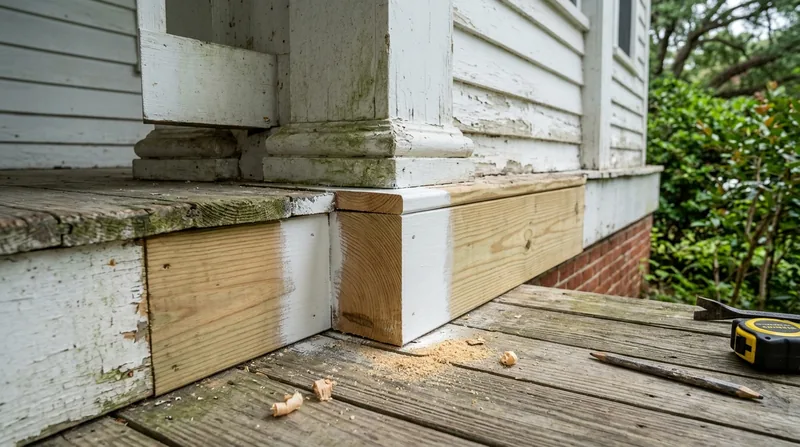




Wood rot and dry rot repair in Fayetteville is a direct response to the climate and building stock of the Sandhills. The long, humid summers, heavy thunderstorms, and the Cape Fear River valley's moisture create ideal conditions for wood decay in sills, crawl spaces, porches, and fascia. Fayetteville's mix of 1900s Colonial Revival homes in Haymount, 1950s brick ranches across Bonnie Doone, and newer two-story homes in military-adjacent subdivisions all share the same vulnerability: wood that stays damp stays soft, and soft wood fails. We cut out the rotted wood, treat what remains, and rebuild with rot-resistant lumber. This is a lasting repair, not a cosmetic patch. The same carpenters who frame your home fix it when moisture and time have taken their toll.
Why Wood Rot and Dry Rot Matter in Fayetteville's Humid Climate
Fayetteville sits where sandy terrain meets river-bottom moisture. Eastern subterranean termites work through sills and crawl-space framing year-round, but wood rot from standing water and high humidity is often the bigger structural threat. A damp crawl space keeps floor joists and rim joists wet for months. Porches and decks absorb rain and never fully dry. Fascia and soffit take the direct hit from gutters that overflow in the heavy thunderstorms that roll through every summer. Once wood stays wet longer than a few weeks, the cellulose breaks down from the inside. Repair costs climb fast when structural members like floor joists or sill plates begin to fail.
- We identify rot by probing with a screwdriver or awl to find soft, spongy wood that indicates active decay.
- We cut out all rotted material to sound wood, then treat the remaining wood with a borate preservative to slow future decay.
- We rebuild with pressure-treated lumber, redwood, or Douglas fir depending on the location and load-bearing requirements.
- We address the moisture source: improved drainage, venting, or gutter repair so the wood stays dry going forward.
Ignoring early rot means a small repair becomes a floor joist replacement, which becomes a structural rebuild. Catching it early saves money and keeps your home sound.
Key info: In neighborhoods like Vanstory Hills and Hillendale above downtown Fayetteville, older homes with shallow crawl spaces are especially prone to moisture buildup. The shaded, damp ground keeps wood wet even in dry spells. Routine crawl-space inspection and ventilation are your first defense.
For more information on related structural issues, see our page on termite damage repair in Fayetteville, which often occurs alongside wood rot in the same structural members.
How We Repair Wood Rot and Dry Rot: Our Fayetteville Process
A wood rot repair job starts with a clear diagnosis. We probe suspect areas, identify the extent of decay, and trace the moisture source. If the structural member can be saved, we remove only the rotted wood, treat the sound wood, and rebuild. If the damage is too deep, we replace the entire member. This is honest work: we do not dramatize or over-sell replacement when repair is the right answer. For jobs involving floor joists, sill plates, or load-bearing walls, we work from your own pest inspection report and focus only on the wood damage we can see and document.
- We probe and map the rot to determine whether it is localized or extends deep into structural framing.
- We remove all soft, discolored, or spongy wood with a chisel, handsaw, or reciprocating saw, cutting back to solid wood.
- We treat the exposed sound wood with a borate wood preservative to inhibit future decay and insect activity.
- We rebuild the damaged section with pressure-treated lumber, redwood, or Douglas fir, sized to match the original load-bearing capacity.
- We sister in new framing members if the original is too far gone, bolting or nailing the new wood alongside the old to restore strength.
- We address the moisture source: improve crawl-space drainage, clear blocked vents, repair gutters, or regrade soil away from the foundation.
The goal is a repair that lasts. We do not patch and leave the moisture problem to return.
Real example: A 1950s ranch in Bonnie Doone had soft rot in the rim joist where a downspout drained into the crawl space. We cut out 18 inches of rotted rim joist, treated the remaining wood, installed a new pressure-treated rim joist section, and rerouted the downspout to daylight. The floor stopped sagging, and the homeowner added crawl-space venting to keep future moisture down. Total repair, not replacement.
For more on floor joist and subfloor issues, visit our floor joist and subfloor repair page.
| Repair Approach | Description | Best For |
|---|---|---|
| Localized cut-out and rebuild | Remove the rotted section only, treat sound wood, and install new pressure-treated lumber to match the original dimensions. | Small, isolated rot in fascia, trim, porch framing, or rim joists where the structural member can be partially salvaged. |
| Sistering with new framing | Install a new load-bearing member alongside the rotted one, bolting or nailing them together to share the load and restore strength. | Floor joists, sill plates, or structural beams where decay is too extensive to cut out but the original member can still provide partial support. |
| Full member replacement | Remove the entire rotted member and install a new one of the same species and dimension, with proper support during installation. | Floor joists, rim joists, beams, or sill plates where rot has compromised more than half the wood or where load-bearing capacity cannot be assured. |
| Moisture remediation | Improve crawl-space drainage, add or clear vents, regrade soil, repair gutters, or install downspout extensions to keep wood dry long-term. | Any rot repair, paired with structural work to prevent recurrence. Without moisture control, new wood will rot just like the old. |
Wood Rot and Dry Rot Repair Cost in Fayetteville: What to Expect
Wood rot repair in Fayetteville starts at $650 for small, localized damage in trim or fascia. A larger job involving a floor joist, sill plate, or multiple structural members typically runs $1,500 to $4,000 or more, depending on the extent of decay, access, and whether the repair requires sistering or full replacement. Load-bearing work may require a structural engineer and a building permit, which add time and cost but ensure the repair meets code. The best way to understand your own cost is to get two or three on-site estimates. Each contractor will assess the wood differently based on experience and method.
Factors that move the cost up include the following. Structural members like floor joists or sill plates cost more to repair than trim or porch framing because they carry the weight of the house. Poor access, such as rot in a crawl space or high fascia, requires scaffolding or special equipment. Moisture sources that are hard to fix, like a grading problem or a buried downspout, add remediation time. Framing that is too far gone to save means full replacement instead of a cut-out repair. Permits and inspections for structural work add 2 to 4 weeks and a few hundred dollars.
See our full pricing overview for more detail on typical jobs and what drives the cost up or down in your neighborhood.
Wood Rot and Dry Rot Repair Near Me: What Fayetteville Homeowners Should Know When Hiring
Hiring a carpenter for wood rot repair means choosing someone who will tell you the truth about what the wood can take and what it cannot. Look for a contractor who is fully insured and can provide proof of coverage. Ask for references from recent jobs in your neighborhood. Understand that structural repairs often require a permit and a building inspection, especially if the work involves load-bearing members or alters the framing. Check whether your homeowners insurance will cover the repair, and ask if the contractor can help you document the damage for a claim. Get two or three estimates so you can compare scope and price. Do not hire based on price alone. A cheap estimate often means a quick patch that will fail in a year or two.
If your home is in an HOA community like Gates Four or Kings Grant, check your covenants before work begins. Some associations have restrictions on exterior work or require approval before a contractor starts. For any work near property lines or involving large trees, verify setback rules with your local building department. In Fayetteville, the City of Fayetteville Planning and Zoning Department can answer questions about permits and code requirements for your specific job.
We are here to answer your questions and provide a free, no-obligation estimate. Call us at (472) 202-5534 or contact us online to schedule an inspection. We have been repairing wood rot and structural carpentry in Fayetteville and the surrounding Sandhills since 2016.
Wood Rot & Dry Rot Repair in Fayetteville: Pricing Guide
| Service | Price | Details |
|---|---|---|
| Small fascia or trim rot | Starting at $650 | Localized cut-out and rebuild in exposed trim, soffit, or fascia where rot is less than 12 inches and does not involve structural load. |
| Porch framing or deck rim | Starting at $1,200 | Repair or sistering of porch posts, deck rim joists, or subfloor framing where access is moderate and wood can be partially salvaged. |
| Floor joist, sill plate, or beam | Starting at $2,000 | Sistering or replacement of load-bearing members in crawl space or basement, including moisture remediation and structural assessment. |
| Full structural replacement with permit | On estimate | Multiple members, full replacements, or work requiring a licensed structural engineer and building permit must be assessed on site. |
| Travel and mobilization | Included | No separate travel charge or mileage fee in Fayetteville and surrounding service areas including Hope Mills, Spring Lake, and Stedman. |
| Free estimate | No obligation | On-site inspection and written estimate within 24 hours at (472) 202-5534. We tell you what the wood can take and what it cannot. |
Indicative pricing, the exact cost depends on square footage, finish, and site access. Free personalized estimate within 24h at (472) 202-5534.


