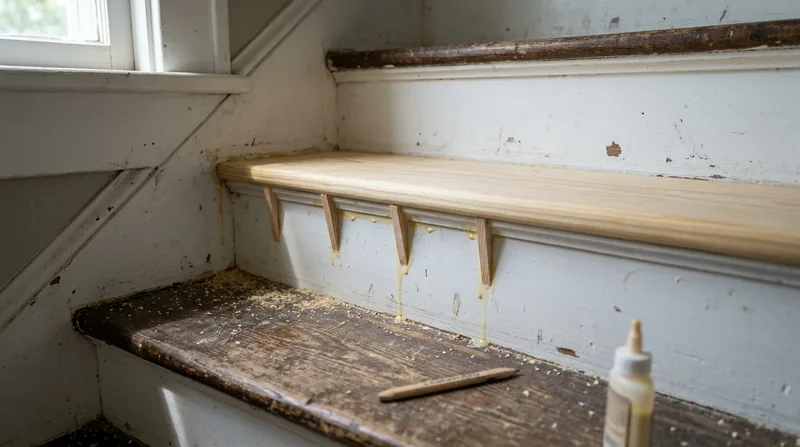




Squeaky treads, loose banisters, and worn stringers are a fact of life in Fayetteville's older neighborhoods and newer subdivisions alike. Whether your home sits in the shaded Colonial Revivals of Haymount, the brick ranches of Bonnie Doone, or the two-story homes of Kings Grant, stair and railing repair in Fayetteville keeps staircases safe, quiet, and built to last. The long humid summers, heavy rain, and seasonal temperature swings of the Sandhills climate take their toll on wood stairs and railings, especially those exposed to moisture or traffic. We repair squeaks at the source, tighten loose balusters and newel posts, reinforce worn stringers, and restore period railings that have loosened or cracked over decades. Every staircase tells the story of your home's use, and we keep it standing solid underfoot.
Why Stair and Railing Repair Matters in Fayetteville Homes
Stairs and railings in Fayetteville endure constant use, humidity, and seasonal wood movement. Treads crack and cup as moisture from the Cape Fear River valley works through exposed wood. Balusters loosen when fasteners corrode or when the newel post shifts under load. Stringers, the angled support beams that carry the entire staircase, split and sag when they absorb moisture or when termite damage weakens the wood below the surface. A railing that feels wobbly is not just annoying, it is a safety issue, especially in homes with children or older adults. We identify the root cause of each problem, repair it where the wood allows, and replace only the parts that have truly failed.
- We tighten loose balusters and newel posts by driving fasteners through the jamb or into the stringers and landing.
- We repair squeaky treads by securing the tread to the stringer and reinforcing the joint between tread and riser.
- We reinforce sagging stringers by sistering a new or reclaimed beam alongside the existing one to share the load.
- We restore period railings in older Haymount and Vanstory Hills homes, replacing damaged spindles while keeping the original handrail and newel posts.
- We set new handrails that feel solid in the hand and meet code for graspability and height.
A staircase that is safe, quiet, and feels secure adds years to its functional life and keeps your home accessible for everyone who lives in it or visits.
Key info: Stairs in Fayetteville homes commonly need repair after 20 to 30 years of use, especially in the older Colonial and Craftsman homes of downtown and the Sandhills neighborhoods. Moisture from our humid climate and termite activity in the substructure can accelerate wear and loosening. We start with a walk-through to diagnose squeaks, movement, and damage, then propose repair or replacement based on what the wood can support.
For more on moisture-driven wood damage, see our guide to wood rot and dry rot repair in Fayetteville.
How We Repair Stairs and Railings in Fayetteville
Our process starts with a close inspection of the staircase to identify the source of each problem. We check for loose fasteners, split wood, termite damage, moisture damage, and structural movement. We test the handrail for graspability and the balusters for wobble. We measure the tread depth and riser height to ensure code compliance. Once we understand the condition, we propose repair or replacement with a clear explanation of cost and timeline.
- We inspect the full staircase, treads, risers, stringers, balusters, handrail, and newel post for damage and movement.
- We locate the source of squeaks by identifying movement between the tread and stringer or between the stringer and the floor.
- We secure loose balusters by tightening fasteners or driving new screws through the jamb into the baluster and stringer.
- We repair squeaky treads by driving fasteners from underneath the stringer or by installing shims and screws to lock the tread in place.
- We reinforce sagging or cracked stringers by sistering a new beam alongside the damaged one and fastening them together with lag bolts and construction adhesive.
- We replace damaged treads, risers, or balusters with new wood matched to the existing species and finish, or with reclaimed wood if restoration is the goal.
- We restore period railings in older homes by replacing only the spindles or balusters while preserving the original handrail and newel posts.
- We sand and finish the repaired staircase to match the rest of the home, whether that is a satin polyurethane or a natural wood stain.
Our work is complete when the staircase is safe, quiet, and visually cohesive with your home's character.
Example: A 1920s Colonial Revival home in Haymount had a squeaky staircase with loose balusters and a handrail that had separated from the newel post at the second-floor landing. We tightened all balusters, reset the handrail fasteners, and reinforced the newel post by driving lag bolts through it into the floor framing. The staircase was quiet and solid again within two days. The original spindles, handrail, and newel post remained in place, preserving the home's historic character.
| Repair Approach | Description | Best For |
|---|---|---|
| Tightening and Fastening | Driving new screws or lag bolts to secure loose balusters, newel posts, and treads to the stringer and landing. | Loose railings, squeaky treads, and minor movement after decades of use. |
| Shimming and Reinforcement | Installing shims between the tread and stringer, or between the baluster and jamb, to eliminate movement and squeaks. | Stairs that squeak despite tight fasteners, or where the stringer has warped slightly. |
| Sistering and Beam Reinforcement | Fastening a new beam alongside a cracked or sagging stringer to share the load and restore structural integrity. | Sagging or cracked stringers, or where termite damage has weakened the original beam. |
| Component Replacement | Replacing individual treads, risers, balusters, or sections of the handrail with new or reclaimed wood matched to the existing finish. | Broken or rotted treads, missing or damaged spindles, or cracked handrails. |
| Period Restoration | Replacing only the damaged spindles or balusters while preserving the original handrail, newel post, and stringer in older homes. | Colonial Revival, Craftsman, and Tudor homes in Haymount and Vanstory Hills where the railing is original and historically significant. |
Stair and Railing Repair Cost in Fayetteville: What to Expect
The cost of stair and railing repair in Fayetteville depends on the scope of the work, the condition of the wood, and whether you are repairing or replacing components. A straightforward repair like tightening loose balusters or fixing a squeaky tread can start at around $600 to $1,000, depending on the number of balusters and the accessibility of the staircase. Reinforcing a sagging stringer by sistering a new beam typically runs $1,200 to $2,500, depending on the length of the stringer and the wood species. Replacing an entire section of the handrail or multiple treads can range from $1,500 to $3,500 or more, depending on the finish and whether you are matching reclaimed wood or new stock. Period restoration work in older homes, where spindles and balusters must be turned or hand-finished to match the original, often costs more because of the time and skill involved.
The best way to understand your actual cost is to get a free estimate from us. We will walk through your staircase, identify the problems, and give you a clear breakdown of labor and materials. Travel is included in our service area, which covers Fayetteville and the surrounding communities. For more details on pricing across all our services, visit our full pricing guide.
Stair and Railing Repair Near Me: What Fayetteville Homeowners Should Know Before Hiring
When you are looking for a carpenter to repair your staircase or railing, start by checking that the contractor is fully insured and has a solid track record in your area. Ask for references from past clients in Fayetteville, Hope Mills, Spring Lake, or Stedman, and call them to ask about the quality of the work and whether the contractor showed up on time and cleaned up after the job. Get at least two or three estimates so you can compare the scope of work and the price. Make sure the contractor explains what they are repairing and why, rather than just quoting a number. If your staircase is in a historic home or a neighborhood with an HOA, check whether there are restrictions on materials or finishes before the work begins. Some older homes in Haymount or Vanstory Hills have deed restrictions or architectural guidelines that affect how repairs can be done.
We are happy to provide references and a detailed estimate at no obligation. Call us at (472) 202-5534 or request a free estimate online. We will respond within 24 hours and schedule a time that works for you.
Stair & Railing Repair in Fayetteville: Pricing Guide
| Service | Price | Details |
|---|---|---|
| Tightening loose balusters and handrail fasteners | Starting at $600 | Includes inspection and tightening of all loose fasteners on one flight of stairs |
| Squeaky tread repair | Starting at $800 | Locating and eliminating squeaks by securing tread to stringer with fasteners or shims |
| Stringer reinforcement or sistering | Starting at $1,500 | Fastening a new beam alongside a sagging or cracked stringer; cost increases with stringer length and wood species |
| Tread or baluster replacement | Starting at $1,200 | Replacing individual treads, risers, or balusters; cost depends on quantity, wood species, and finish matching |
| Period railing restoration | On estimate | Replacing spindles while preserving original handrail and newel post in historic homes; requires on-site assessment of wood species and finish |
| Free estimate | No charge | Response within 24 hours at (472) 202-5534; includes detailed scope and materials breakdown |
Indicative pricing, the exact cost depends on square footage, finish, and site access. Free personalized estimate within 24h at (472) 202-5534.


