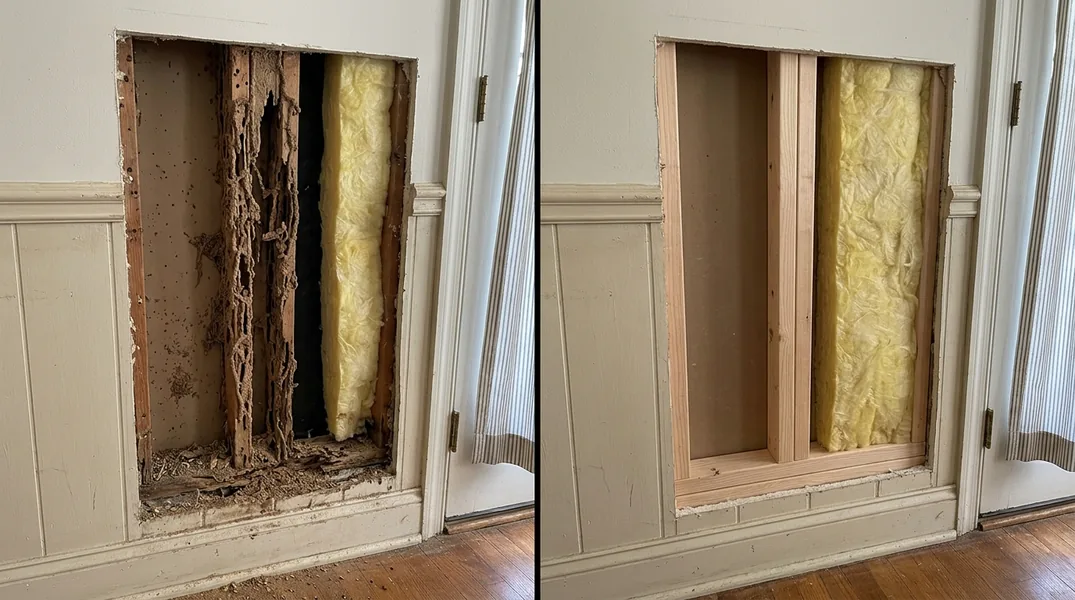
The Repair vs. Replace Decision: What Homeowners Need to Know
When you discover rotted or termite-damaged wood in your home, the first question is almost always the same: do I need to repair it or replace it entirely? The answer depends on several factors, and making the right choice can save you thousands of dollars while protecting your home's structural integrity. At Fayetteville Carpentry, we help homeowners in Fayetteville and surrounding areas make this decision every day, and we want to share what we've learned.
The truth is that not all wood damage requires a complete replacement. In many cases, repair rotted wood without replacing the entire section is possible and can be the most cost-effective solution. However, there are situations where replacement is the only safe and practical option. Understanding the extent of the damage, the location of the affected wood, and the structural importance of that component are all critical to making an informed decision.
When Repair Is Possible: Signs Your Wood Can Be Saved
Surface-level rot and minor damage are often excellent candidates for repair rather than full replacement. If the decay affects only the outer layers of wood and hasn't penetrated deeply into the structural core, a skilled carpenter can often remove the damaged section and restore the wood with epoxy fillers, wood consolidants, or strategic patching. This approach works particularly well for trim, siding, window frames, and other non-load-bearing elements where cosmetic restoration is acceptable.
Wood Rot & Dry Rot Repair techniques have advanced significantly over the past decade. Modern wood restoration products allow contractors to stabilize compromised wood, fill cavities, and restore structural strength without removing the entire board or beam. When rot is caught early and is confined to a small area, repair is not only possible but often the preferred method because it preserves the original material and character of older homes.
Similarly, Termite Damage Repair can sometimes be addressed through localized repair if the infestation was caught before extensive tunneling occurred. If termites have created galleries in only one section of a beam or joist, filling and reinforcing that area may be sufficient. However, this requires a thorough inspection to confirm that the damage is truly isolated and that no active infestation remains.
When Replacement Is Necessary: Red Flags Every Homeowner Should Know
Certain situations demand complete replacement rather than repair. If wood damage has compromised more than about 30 percent of a structural member's cross-section, replacement is almost always the safer and more durable choice. Load-bearing beams, floor joists, and wall studs that show extensive decay or termite damage cannot be reliably repaired with fillers and consolidants alone. The structural risk is simply too high.
Deep dry rot, which penetrates to the core of the wood and causes it to become brittle and cubical in appearance, typically requires replacement. Unlike surface rot, which can sometimes be arrested and stabilized, deep dry rot has already compromised the wood's ability to carry loads safely. Similarly, wood that has been severely tunneled by termites often lacks sufficient structural integrity to be safely restored. When you're dealing with Floor Joist & Subfloor Repair or other load-bearing components, erring on the side of caution is always the right call.
If rot or termite damage affects more than one structural member in close proximity, replacement of the entire affected section is typically necessary. This is especially true in areas like basements, crawl spaces, and around foundations where moisture is a persistent problem. Partial repairs in these high-risk zones often fail within a few years because the underlying moisture problem hasn't been addressed. A complete replacement, combined with moisture control measures, offers a permanent solution.
Assessing Wood Damage: How to Know What You're Dealing With
Before you can decide whether to repair or replace, you need an accurate assessment of the damage. Start by performing a simple probe test. Using a screwdriver or awl, gently press into the suspected damaged area. If the tool penetrates easily and the wood feels soft or crumbly, you have rot. If the wood is hard and resists penetration, the structural integrity is likely still intact. However, this basic test is only a starting point. Professional inspection is essential for making the final decision.
Look for visual clues as well. Dry rot typically appears as wood that's shrunken, discolored (often darkened), and cracked in a cubical pattern. Wet rot tends to be softer and may have a mushroom-like fruiting body nearby. Termite damage shows up as galleries or tunnels running through the wood, often filled with soil or mud. In Fayetteville, where humidity levels support both fungal decay and termite populations, seeing any of these signs should prompt an immediate professional inspection.
The location of the damage matters enormously. Rot in a decorative porch post is far less critical than rot in the rim joist of your foundation or in a main support beam. Damage to exterior siding can often be repaired or replaced section by section, whereas damage to structural framing may require Beam Replacement & Load-Bearing Wall Removal by a licensed professional. This is why getting a professional evaluation is so important before committing to a repair strategy.
Wood Repair Cost vs. Replacement Cost: Understanding Your Budget
The financial decision between repair and replacement hinges on several variables. Repair work is typically less expensive upfront because it involves removing only the damaged portion and treating or filling the void. Pricing for repair can range from a few hundred dollars for minor surface rot to several thousand for more extensive work involving structural reinforcement. Replacement, by contrast, involves removing the entire affected board or beam and installing new material, which is usually more labor-intensive and uses more materials.
However, the lowest upfront cost is not always the best value. A repair that fails within a few years because the underlying cause wasn't addressed will end up costing you more in the long run. Replacement, though more expensive initially, often provides better long-term value because it eliminates the problem entirely. Additionally, if the damage is extensive and scattered across multiple areas, replacement may actually be more economical than attempting multiple localized repairs.
When evaluating replace rotted wood siding or other exterior elements, consider the age and condition of surrounding materials. If your siding is 20 years old and only one section is damaged, repair makes sense. If most of it is aging and this is just the first sign of widespread deterioration, replacement of larger sections might be more cost-effective. The same logic applies to interior framing, joists, and beams. Fayetteville Carpentry can help you understand the true cost of both approaches and recommend the option that offers the best long-term value. Contact us at (472) 202-5534 or request a free estimate to discuss your specific situation.
Addressing the Root Cause: Why Repair Fails Without Prevention
One of the most common mistakes homeowners make is focusing only on the visible damage without addressing what caused it in the first place. Rot and termite damage don't appear randomly. They result from moisture, poor ventilation, wood-to-soil contact, or active pest infestations. If you repair or replace damaged wood without fixing these underlying issues, the problem will almost certainly return.
Moisture is the primary culprit behind wood rot in most homes. Poor drainage, leaking gutters, foundation cracks, and inadequate ventilation in crawl spaces and attics all contribute to the moisture buildup that fungi need to thrive. Termites are attracted to damp wood and soil contact. Before investing in any repair or replacement work, have a professional identify and address these root causes. This might involve improving drainage, repairing gutters, sealing foundation cracks, or installing vapor barriers in crawl spaces. These preventive measures are investments that will protect your repair work and extend the life of your home's structure.
At Fayetteville Carpentry, we don't just fix the wood. We help you understand what allowed the damage to occur and what steps you need to take to prevent it from happening again. Whether your situation calls for Wood Rot & Dry Rot Repair or a more comprehensive solution, addressing moisture and pest control is part of the equation. This holistic approach ensures that your investment in repairs or replacement actually solves the problem rather than just treating the symptoms.
Looking for a professional carpentry contractor in Fayetteville? Fayetteville Carpentry responds fast for all your carpentry needs.
Get a Free QuoteOur services: Wood Rot & Dry Rot Repair · Termite Damage Repair · Floor Joist & Subfloor Repair